Introduction to Gears
A gear is an important mechanical component whose teeth mesh continuously to transmit motion and power. Gears can engage with other toothed components, including other gears, racks and worms, to change speed, torque, direction or type of motion. Their high efficiency, precise transmission ratio and wide power range make gear mechanisms common in industrial products. Gear design and manufacturing quality directly affect the quality of those products.
1. Module, Pitch Diameter and Number of Teeth
- Module: The module is a basic measure of a gear's size. It determines the overall size and tooth proportions. The module is the pitch diameter divided by the number of teeth :
ℹ️INFO
A larger module produces a larger gear and larger teeth.
⚠️WARNING
Only gears with the same module can mesh correctly with one another.
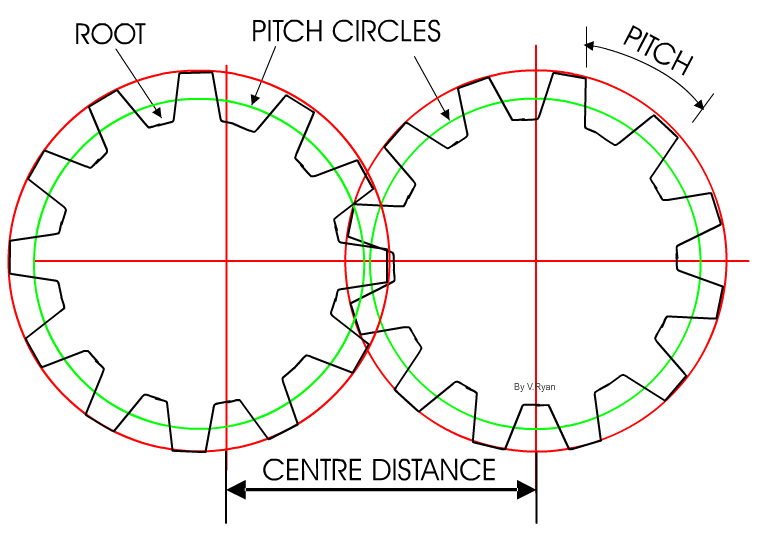
Pitch diameter: The pitch circle is an imaginary circle passing through the pitch points of the gear teeth. Its diameter is the pitch diameter.
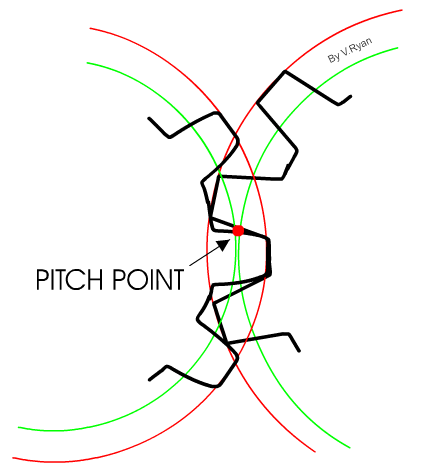
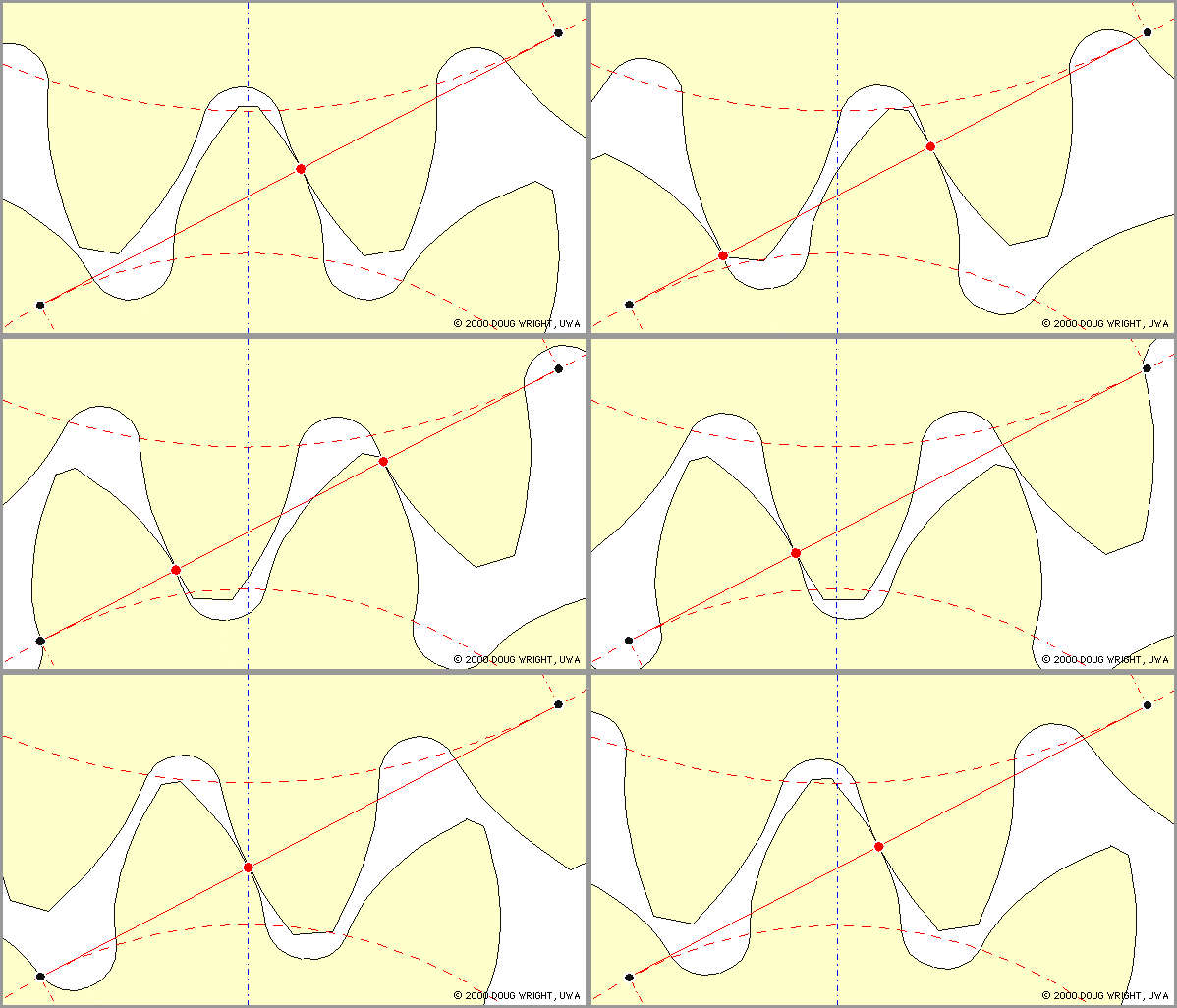
A gear tooth is an involute curve and cannot be accurately drawn with simple ruler-and-compass construction. In the idealised model, two meshing gears contact at the pitch point during transmission. This point lies between the tooth tip and root, but not exactly halfway between them.
Drawing a circle through the pitch points makes it easy to calculate the centre distance between gears. The pitch circle is therefore essential when defining gear size and transmission ratio.
Number of teeth: The number of individual teeth around the gear.
2. Centre Distance
Meshing gears must first have the same module. Use the module and tooth count to calculate each pitch diameter (), and then calculate the centre distance:
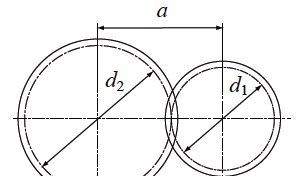
📝NOTE
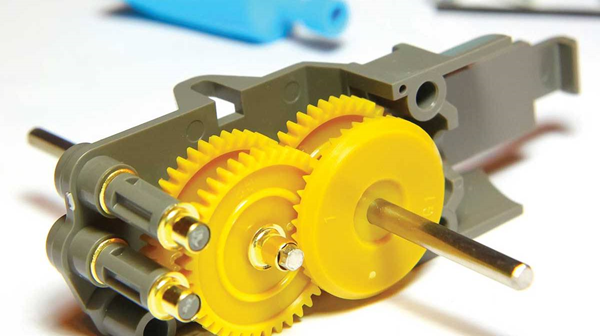
The familiar Tamiya gearbox below uses standard metric module 0.5 gears. Its large and small gears have 42 and 12 teeth respectively. The shaft spacing is:
3. Drawing Gears in Fusion 360
3.1 Installing the Add-in
As explained above, gear teeth are involute curves rather than simple ruler-and-compass geometry. We will use the Helical Gear Plus add-in to generate them.
Download the add-in from its Autodesk App Store page:
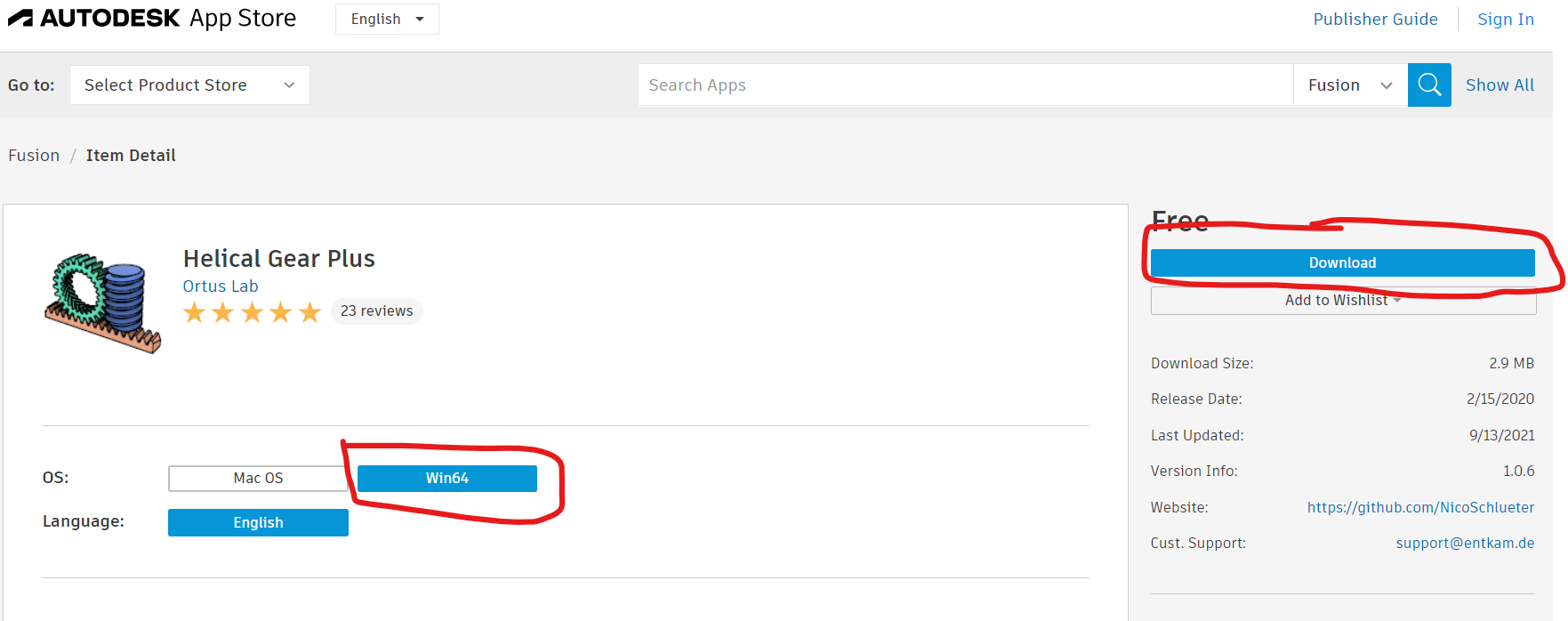
Choose the correct operating system and click Download. Sign in to your Autodesk account when prompted, then install the downloaded package normally.
3.2 Generating a Gear
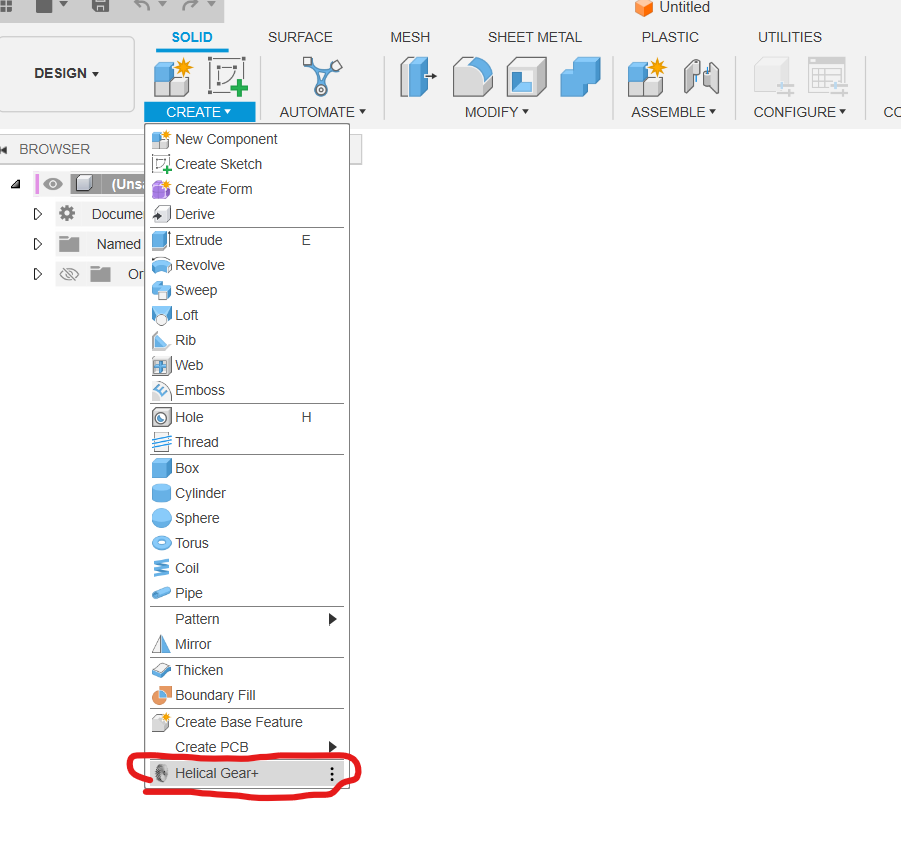
After a successful installation, Helical Gear+ appears at the bottom of the Create menu.
3.3 Parameters
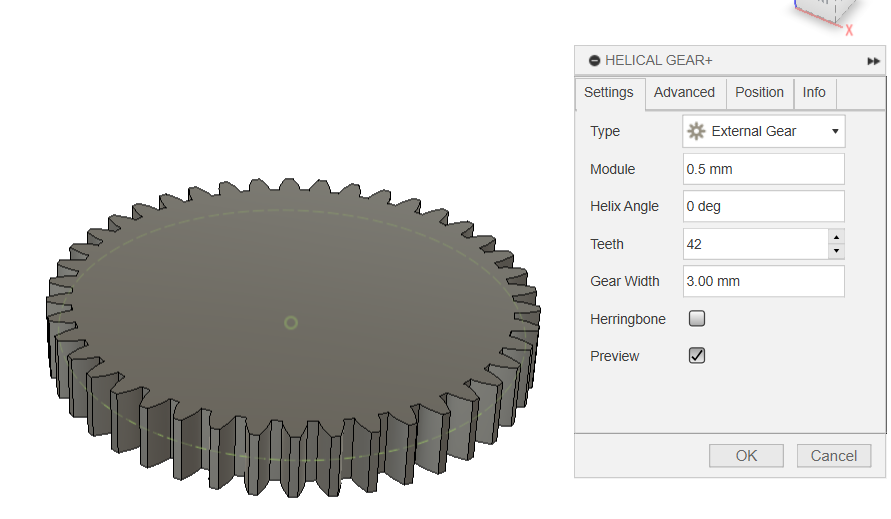
Type: choose an external gear, internal gear or rack.Module: the gear size described above.0.5, for example, is common in Tamiya gearboxes.Helix Angle: use0°for a normal spur gear. Helix angles are covered in the next chapter.Teeth: the number of teeth; the example uses42.Gear Width: the gear thickness; the example uses3 mm.Herringbone: turns a single helical gear into a symmetrical herringbone gear.Preview: displays the result before it is created.
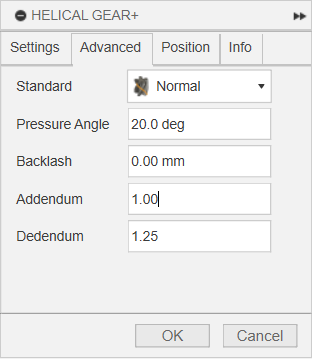
On the next page:
Standard:NormalandRadialdetermine whether the module of a helical gear is calculated from its planar projection or true distance.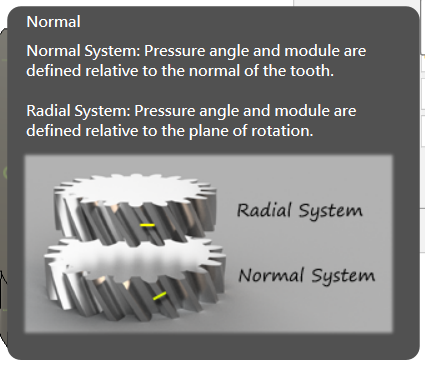
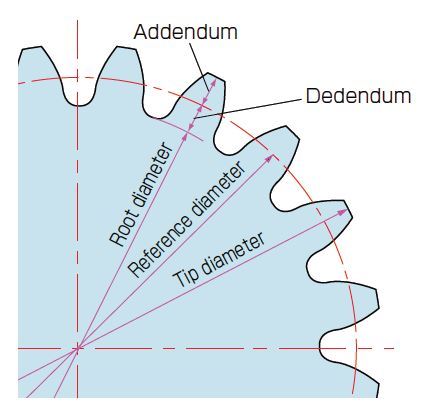
Pressure Angle: controls the tooth profile. A larger angle makes teeth flatter and more pointed; a smaller angle makes them squarer. Common values are20°and14.5°, with20°used most often.Backlash: the clearance between meshing teeth. Real gears need some backlash to avoid binding and to leave room for lubricant, but excessive backlash reduces accuracy and can damage the gears.AddendumandDedendum: the radial distances from the pitch circle to the tooth tip and root. Standard values are normally1and1.25times the module respectively.
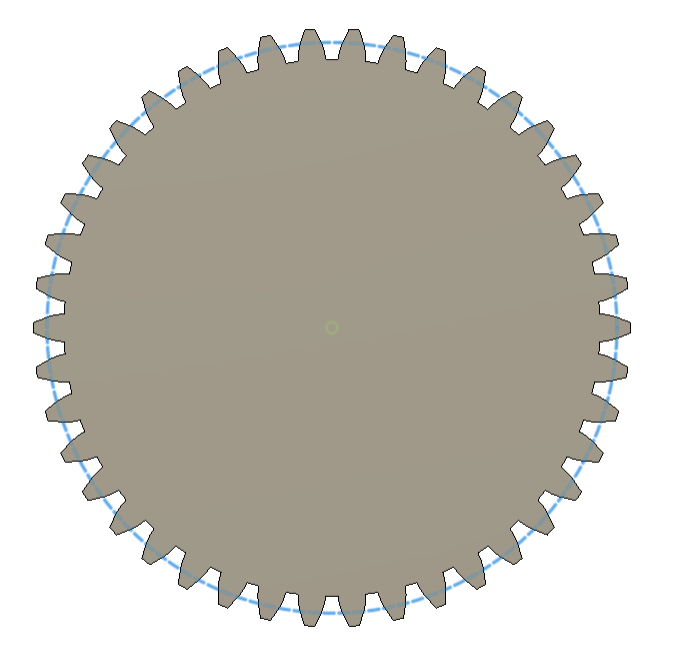
The Position and Info pages are not covered here. Click OK to create a 42-tooth, module 0.5 gear. The add-in retains the pitch circle, which is useful for later design and assembly.
Translation notice: This English page was generated automatically by AI and has not yet been reviewed by a human. It will be checked and revised page by page when time permits.