Planetary Gears
A planetary gear train consists of one or more outer gears rotating around a central gear, like planets orbiting the Sun.
Planetary systems combine high load capacity, compact size, smooth operation and coaxial torque transmission. Several planet gears can share the load. A typical stage loses only a small proportion of its power, so planetary gearboxes can provide a high output-to-input power ratio. Because the load is distributed evenly among the planet gears, the output is also smooth. Planetary systems are widely used in heavy machinery and vehicle transmissions.
This chapter is based on the detailed article and video at How To Mechatronics.

1. Structure
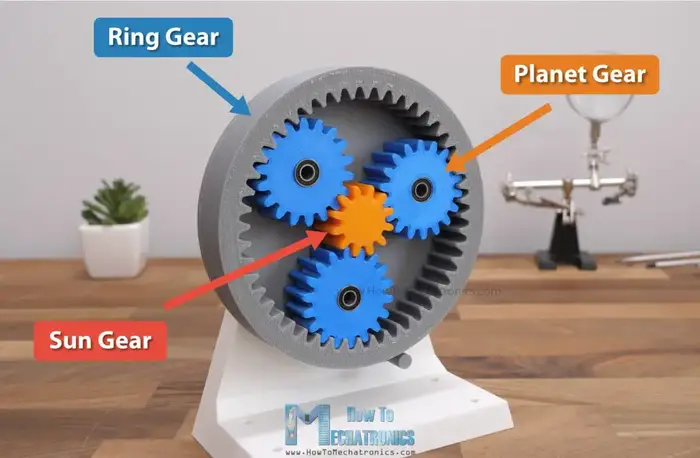
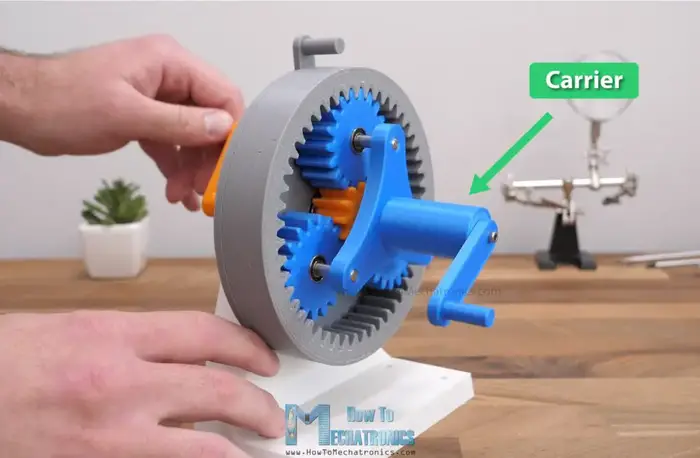
A planetary gear set consists of a sun gear, planet gears, a ring gear and a planet carrier. In a common arrangement, the sun gear is the input and the ring gear is held stationary. The sun drives the planets around it, which turns the carrier as the output.
Holding any one of the sun, ring or carrier stationary allows the other two members to provide different ratios. Automatic transmissions sometimes exploit this property. This chapter covers only the most common arrangement; see the reference above for the alternatives.
2. Design
Our goal is a small, 3D-printed herringbone-gear toy with four or five planet gears.
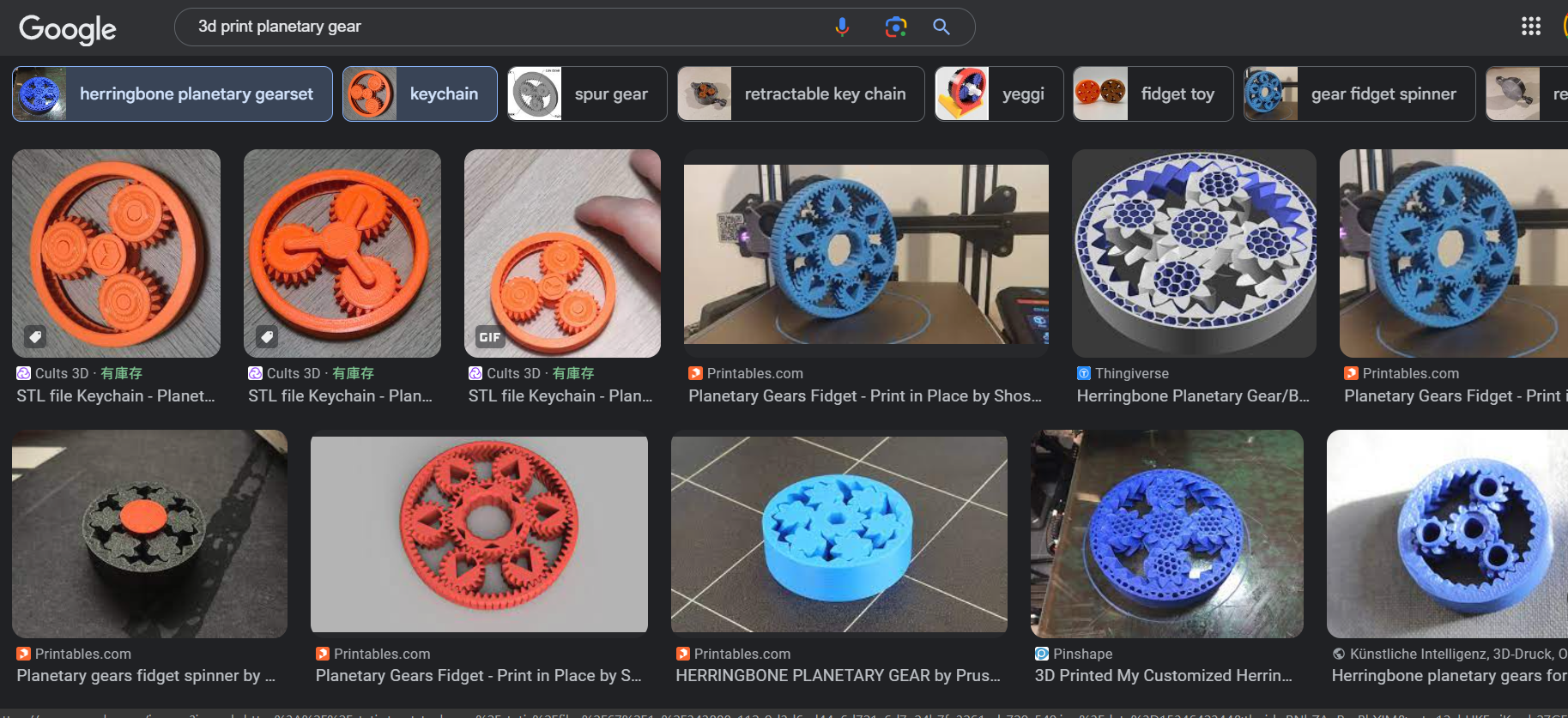
Several conditions must be satisfied.
2.1 Gear Ratio
Unlike a simple pair of gears, the ratio for this arrangement is:
📝NOTE
Here is the number of teeth on the ring gear and is the number on the sun gear.
Start by choosing the sun and ring tooth counts for the desired ratio. If the ring has 36 teeth, a 3:1 ratio requires an 18-tooth sun, while a 4:1 ratio requires a 12-tooth sun.
2.2 Planet-Gear Tooth Count
📝NOTE
The planet tooth count depends on the sun and ring counts and must be a positive integer:
For the gearbox above, the planets have 9 teeth at 3:1 and 12 teeth at 4:1.
2.3 Number of Planet Gears
📝NOTE
The sum of the sun and planet tooth counts must be divisible by the number of planets:
where is the number of planet gears.
For the 3:1 and 4:1 examples, the sums are 27 and 24. Their largest factors are 9 and 6 respectively.
Because a planetary set must satisfy several conditions at once, the following tool can help find valid combinations:
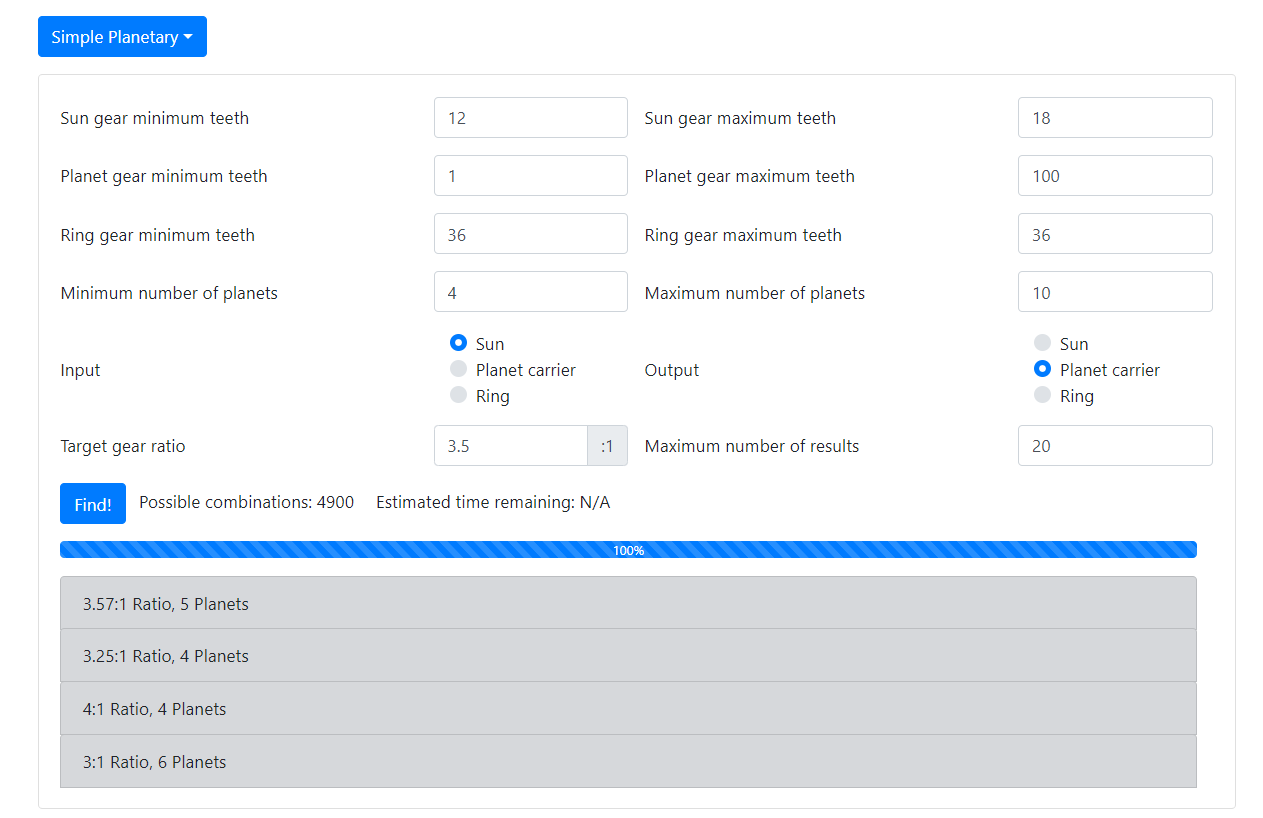
In this example, fix the ring at 36 teeth. A target ratio between 3:1 and 4:1 gives a sun between 12 and 18 teeth. Set the planet-tooth search range to 1–100 and the number of planets to 4–10, preferring more planets where possible. Use 3.5 as the target ratio.
Next, visualise the result with:
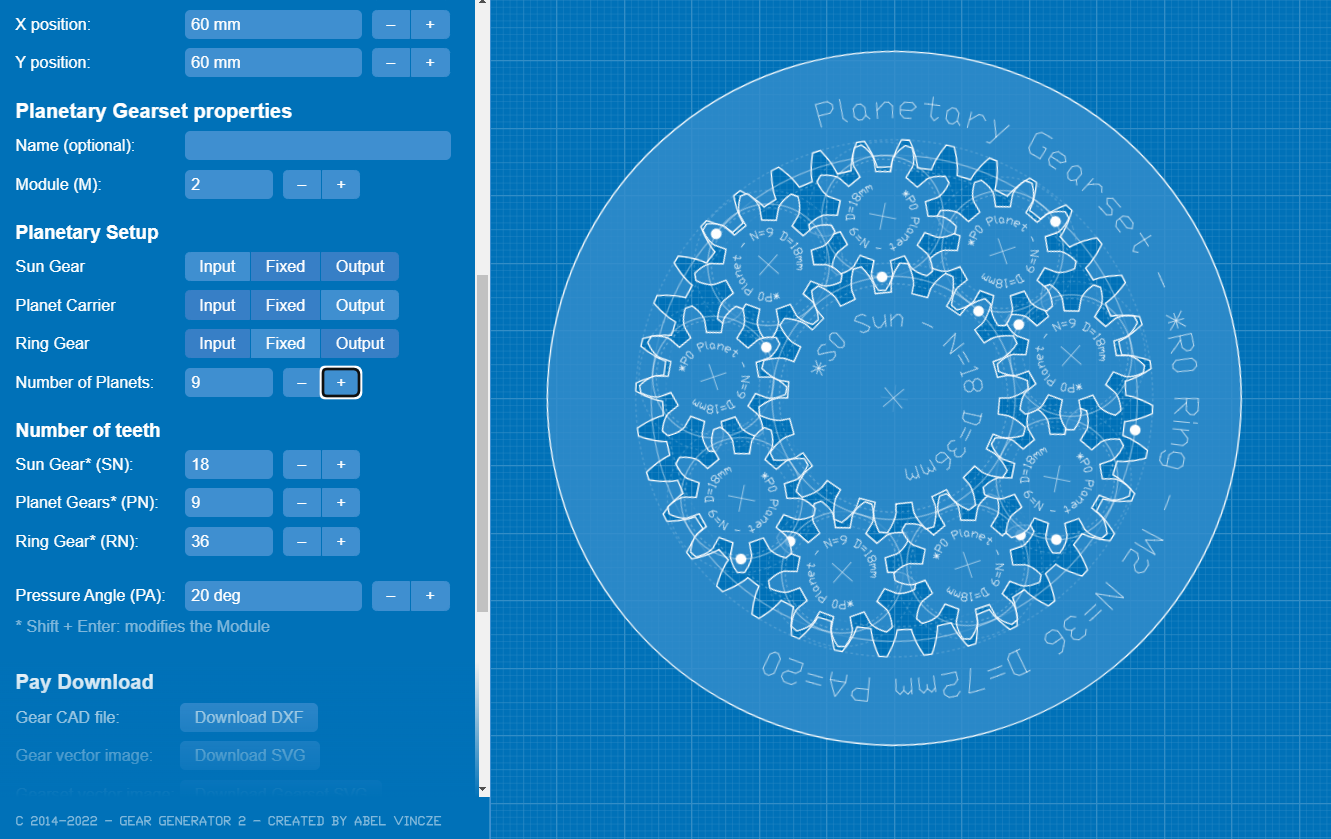
The calculation suggests that a 3:1 set can theoretically use nine planets, but entering the values in Gear Generator reveals the physical interference: nine planets do not fit.
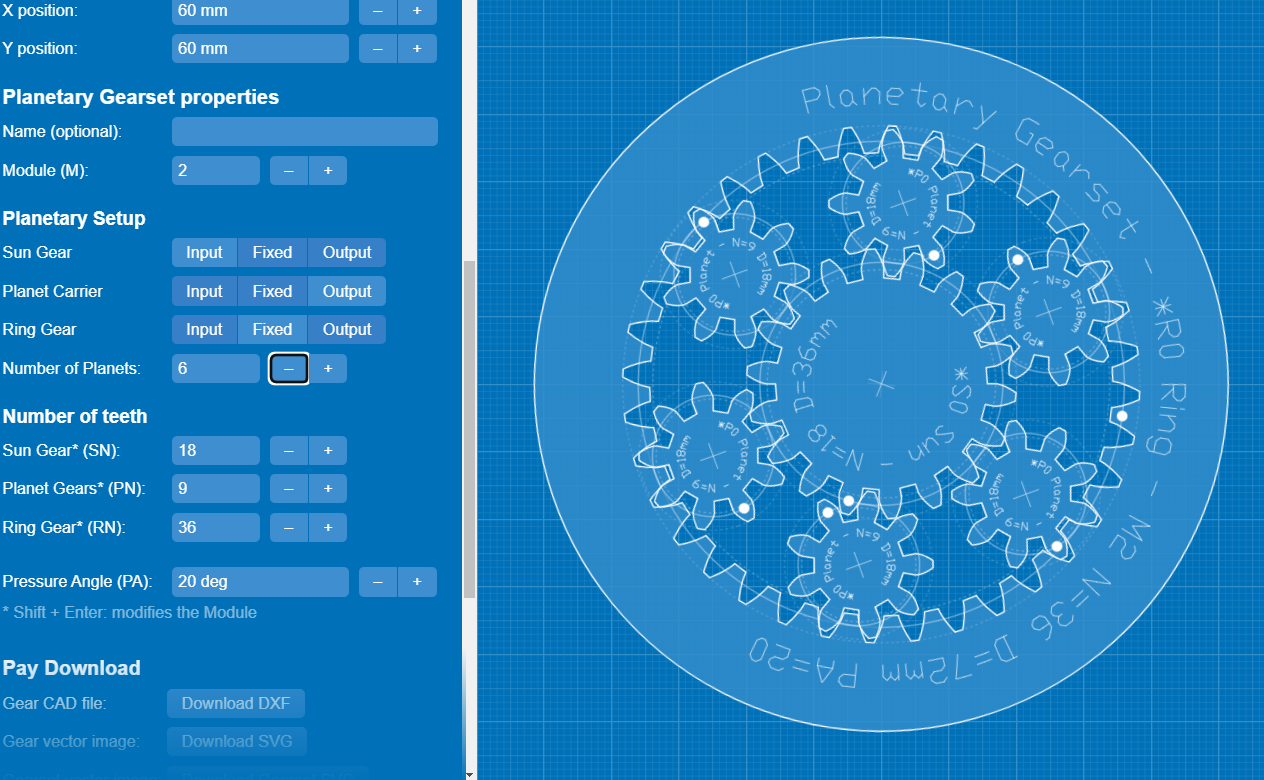
Choose the valid result from Planetary Gear Generator with the greatest practical number of planets.
ℹ️INFO
Gear Generator can export a 2D DXF for laser cutting or import into Fusion 360.
⚠️WARNING
The visual Gear Generator does not validate the required number-of-planets condition. If the tooth counts are incompatible, the displayed planet angles will not be evenly spaced.
3. Modelling
This section extends the previous gear tutorial and gives only the main steps so that you can practise creating the gears yourself.
3.1 Draw the Layout Sketch
We will use module 1.5 mm. Multiply each tooth count above by 1.5 to obtain its pitch diameter.
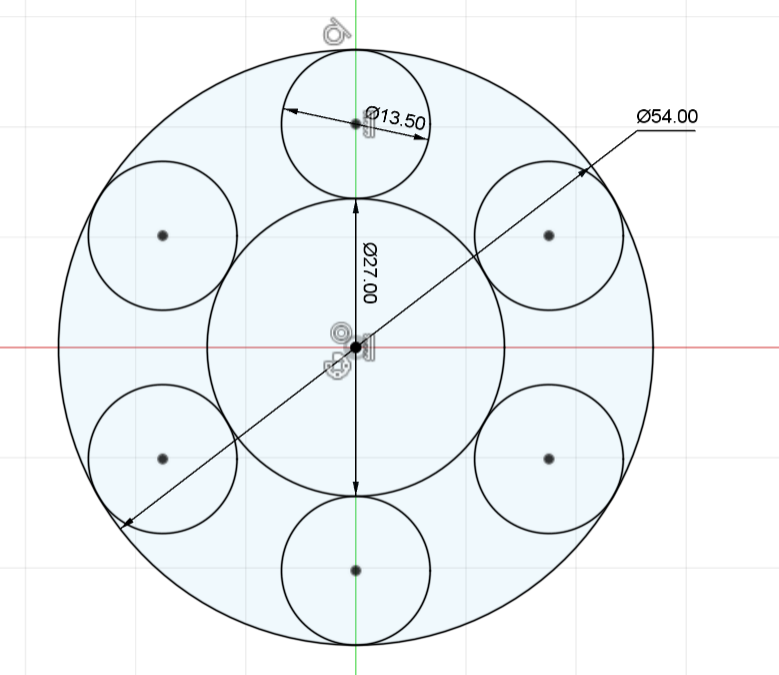
3.2 Create the Ring Gear
- The intended helix angles for the sun, planets and ring are
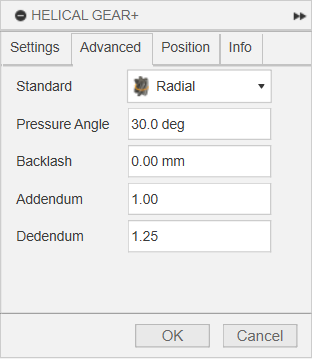
+30°,−30°and+30°respectively so that they mesh. - However, because the ring is an internal gear, enter
−30°for it to mesh with the−30°planets. - Set a larger
30°pressure angle to help the printed mechanism rotate smoothly.
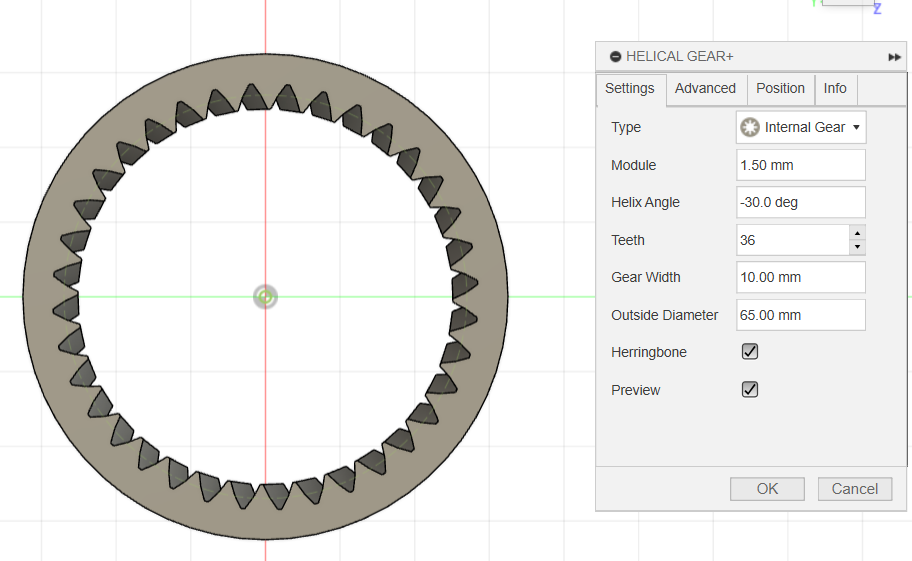
- Use
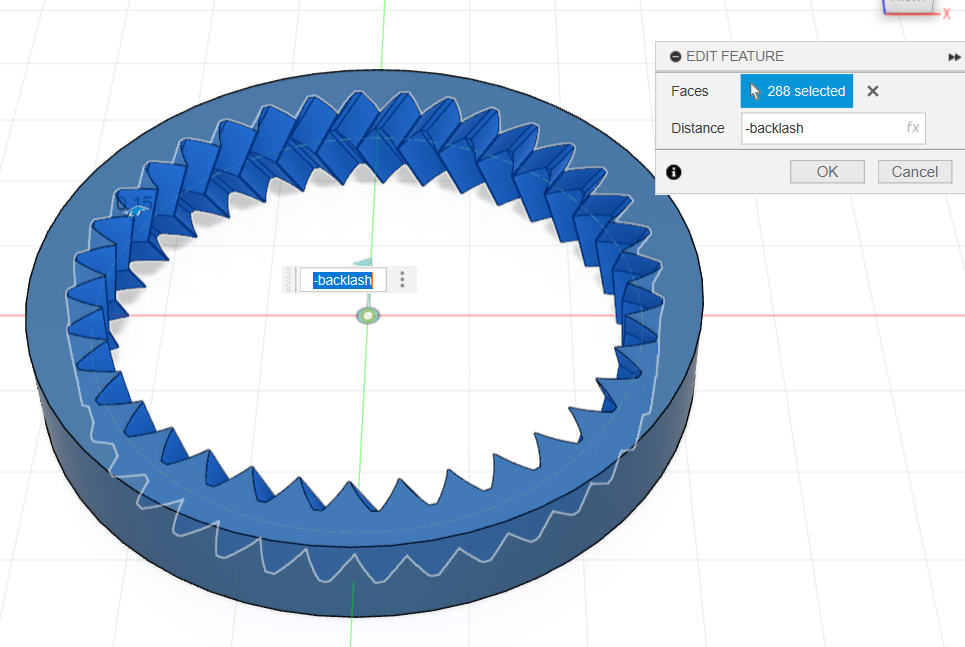
Offset Faceto add0.15 mmclearance to the gear teeth.
3.3 Create the Remaining Gears
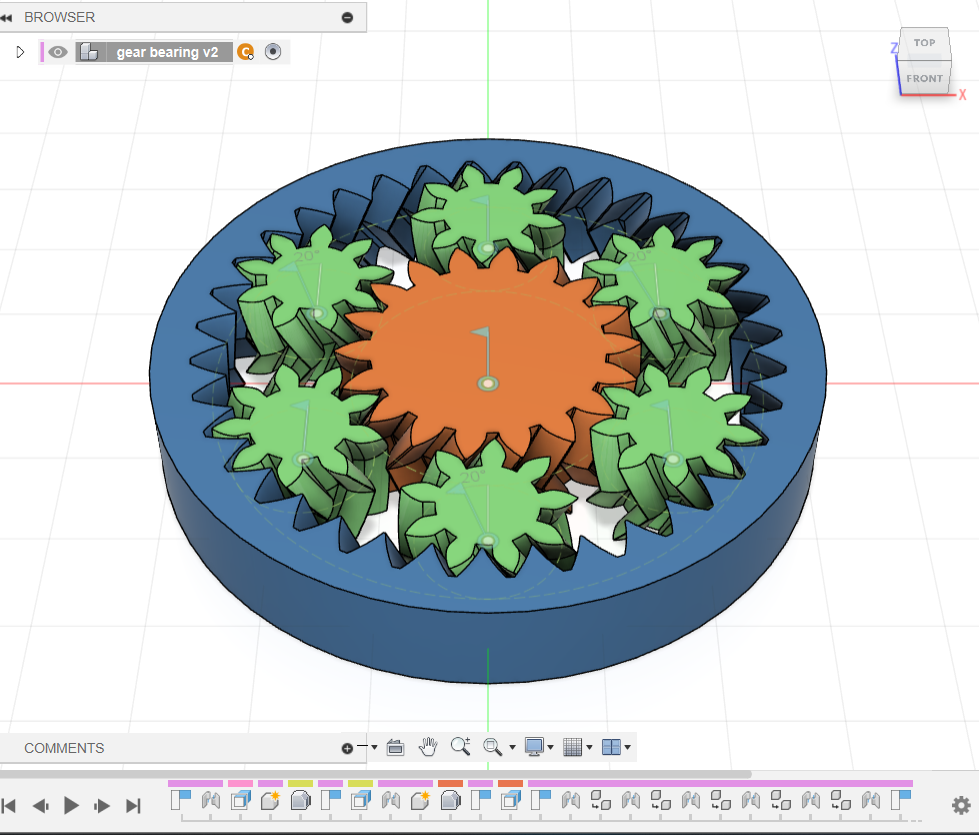
- Create the other gears with the same general procedure.
⚠️WARNING
For a print-in-place model, carefully align the planet gears so that they mesh with both the ring and sun before printing.
Translation notice: This English page was generated automatically by AI and has not yet been reviewed by a human. It will be checked and revised page by page when time permits.